
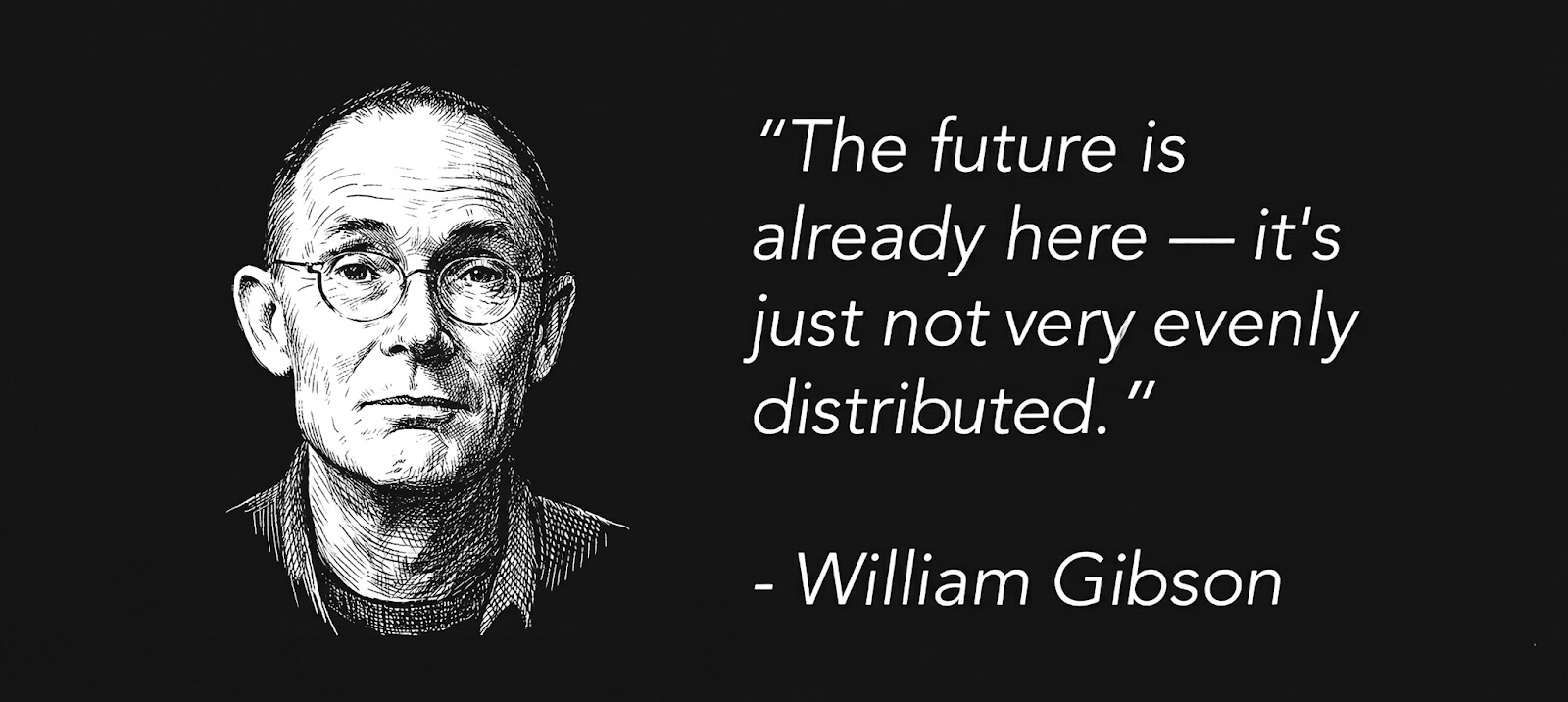
I have two stacks of news summaries on my desk right now.
The first stack makes me worry. It shows that over 55,000 people lost their jobs in 2025 in MNCs because of AI.
The second stack surprises me. It shows the UAE, spending huge amounts of money on AI education. It lists companies after companies crushing their market cap limits.
Something doesn’t add up here.
The economy isn’t broken. It’s changing. Companies in Dubai aren’t running out of money. They’re making a trade: they’re swapping average human workers for smart AI tools.
Most employees are trying to fight this change the old way. They work longer hours. They promise to be more dependable. But this strategy isn’t working anymore.
Being dependable isn’t special anymore. An AI tool, today, can be dependable for $20 a month. If your main value is “consistent work” you’re no longer helpful to your company. You’re actually costing them money.
I hear the same sentences every week: “Why don’t companies call me back? Why didn’t they renew my contract?”
The answer is simple. You’re competing in a losing war. You need to stop competing and start leading a new path.
—
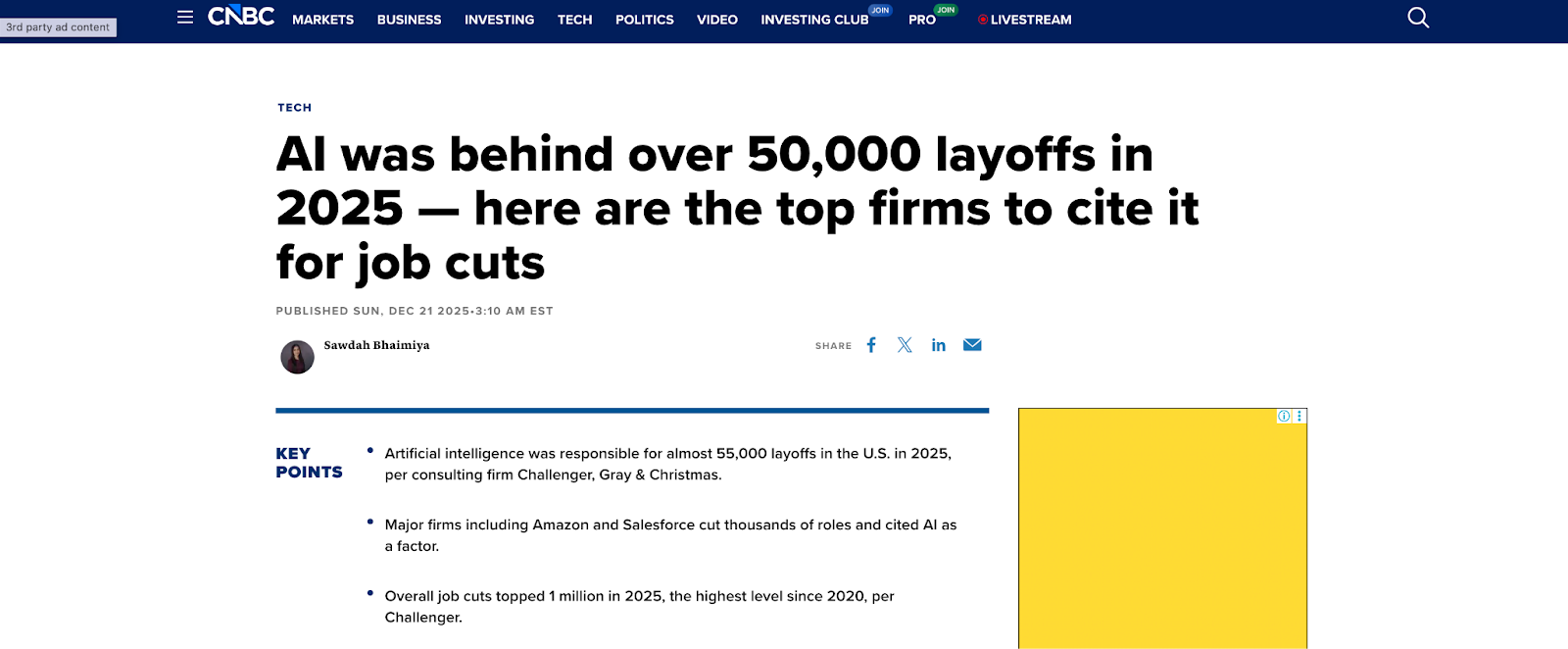
When we see a headline like this, we panic. It feels like a disaster.
But I sit in boardrooms with company leaders. And to be honest, they aren’t feeling any disasters at all.
Because companies have come up with a new way. They’re firing their employees quietly. I call it Quiet Offboarding.
Companies Are Moving Their Money
In the past, layoffs meant a company was broke. That’s not true anymore. Today, layoffs are about swapping one investment for another.
Imagine you own a car that needs constant repairs. Then you find an electric car that costs less to run and never breaks down. You’d sell the old car and buy the new one, right? That’s what companies are doing.
They’re trading workers (the old car) for AI systems that can grow and scale (the new electric car).
Look at companies like Duolingo or IBM. They didn’t cut workers because they were failing. They were redesigning how they work. Duolingo cut 10% of their contractors not to save pennies. They moved that money from paying people to buying computer power. AI could do translation work faster and cheaper.
Here’s the new reality: You’re not competing for a job against another person anymore. You’re competing for budget money against a software subscription.
The “Middle-Skill” Trap Is Getting Serious
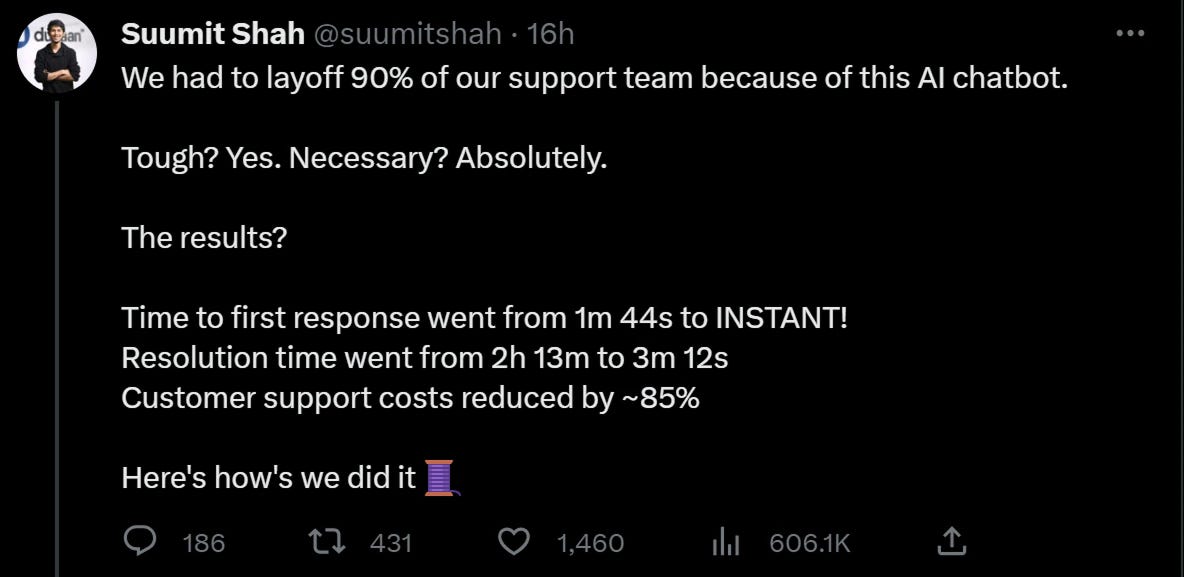
The bar for “good enough work” is too high now.
For the past twenty years, you could build a solid career on what I call “Middle Skills.”
Can you write a decent email? Summarize a meeting? Organize a spreadsheet? Show up on time? You were safe. You were valuable.
But today, being “reliable” puts you in danger. All those tasks, summarizing, organizing, creating drafts, now cost only $20 a month.
If your work quality is “pretty good,” you’ve walked into the Middle Skills Trap. You cannot win a price war against a computer program that costs almost nothing and never sleeps.
That’s where workers are right now.
The Silent Removal Strategy
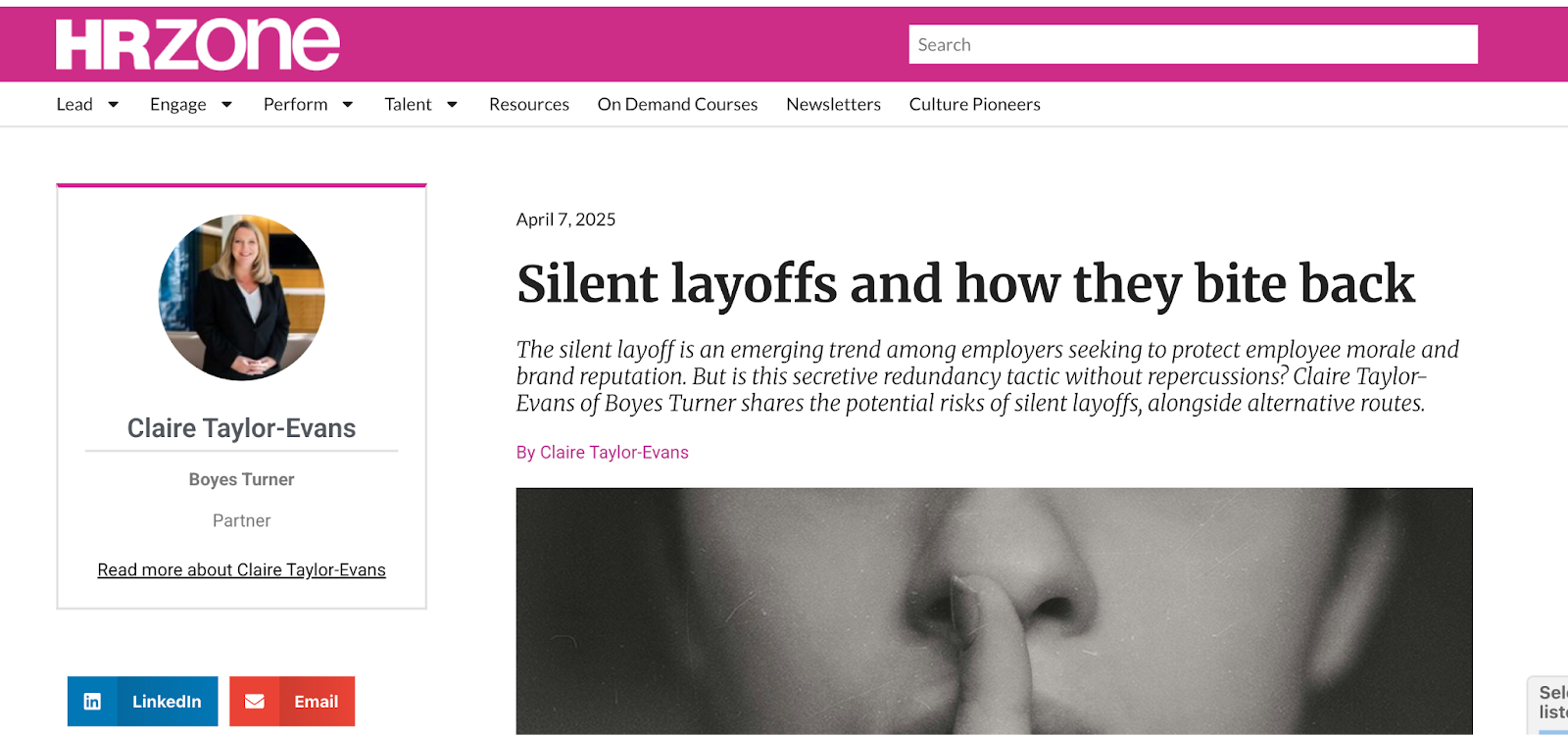
Companies know that big layoff announcements look bad in the news. So they’ve adopted a quieter approach. This is the “Quiet” part of Quiet Offboarding.
HR departments call it “redistributing roles.” It doesn’t look like mass firings. It looks like natural loss.
Watch for these signs:
Your coworker leaves? The company doesn’t hire a replacement.
Your contract ends soon? They let it expire in silence..
A new project starts? They don’t hire a team; they buy a software tool.
They’re “sunsetting” old-style jobs.
Later, they reopen the positions, but require half the people and double the technical skills.
Dubai Is Moving Even Faster
Finally, let’s talk about where we are. We’re in Dubai. And location matters.
If you worked in Europe, you might have 3 to 5 years to adjust to these changes. In the UAE, you might have 6 months.
The government here isn’t just investing in AI—they’re building an AI Nation. The message from leadership is clear: remove inefficiency, establish the future.
In such an environment, the gap between “AI-smart” workers and “Non-AI” workers grows even faster. If you’re standing still here, you’re actually going down.
How To Shift From “Worker” to “Orchestrator”
If you want to survive this money shift, you need to change how you work.
Accept that you can’t win simply by grinding harder at tasks that the market now considers free.
Stop competing with machines at doing tasks. Start leading them at strategy. Become an AI Orchestrator.
Here’s exactly how you make that change.
Step 1: Find Your “Zombie Tasks”
We all have them. These are tasks that make us feel busy and productive but create zero unique value. I call them “Zombie Tasks”.
They look alive; they fill your calendar; but they’re actually dead weight.
Print out your weekly schedule. Have a gut honest look. Circle every activity that involves:
Summarizing data
Scheduling meetings
Creating first drafts
Basic formatting
Here’s the hard part: Stop being proud of these tasks.
For years, we felt good about being “great at managing email” or “fast at writing meeting notes.” In 2025, that’s not a skill—it’s a weakness. They might make you feel useful, but the reality is different.
If you’re holding onto these tasks, you’re hurting yourself. Identify them so you can give them to AI.
Step 2: Be Intelligent & Adopt AI
There’s a simple economics rule: Price follows scarcity.
The ability to write text, create code, or do basic analysis isn’t scarce anymore. It’s available for $20 per month.
So if you’re still charging your employer your full hourly rate to do work that ChatGPT does in seconds, you’re overcharging.
This is where the “Average Crisis” hits hardest. If you refuse to use automation because “you like the old way,” you’re making yourself too expensive.
You must automate the basic work immediately. And DO NOT hide it. The value you bring isn’t the time you spend typing at your keyboard. It’s the result you deliver at the end.
Step 3: Use AI to Multiply Your Output
Most professionals use AI to finish work early so they can go & chill. Never do that.
If you use AI to do your 8-hour job in 4 hours, then you’re only proving to your boss that your role is part-time.
Instead, use that saved time to deliver more than expected.
If you usually bring one marketing plan to the meeting, use AI to build three different options. A Safe plan, an Aggressive plan, and a Creative plan. Test each one. Think through the problems with each.
Don’t use the tool to do the same work faster. Use it to do deeper work that a human alone wouldn’t have time to produce. This is how you move from “Worker” (doing the task) to “Orchestrator” (managing the outcome).
Step 4: Add Your Human Touch
This is your safety net. AI is generic. You are specific.
AI has access to all the information on the internet. But you have something it doesn’t: context.
The “Human USP” in the AI era comes from your ability to filter machine output through local knowledge, culture, or strategy.
For example, an AI can write a perfect sales script. It can use all the right psychological tricks. But only you know if that aggressive tone will work in a traditional meeting in Riyadh versus a boardroom in New York.
The machine gives you the “Global Average.” You provide the “Local Specific.”
Your value lives in that filter. Never accept raw AI output.
Your name on a document should mean: “I checked this, and I customized it for our specific situation.”
Think of yourself as a translator, not between languages, but between “what AI knows” and “what actually works.”
Step 5: Become the Pilot, Not the Passenger
Finally, this is the most important career advice I can give you: Don’t wait for permission.
Too many professionals wait for HR to create a “Company AI Training Program.” By the time that training reaches you, the decisions about who stays and who goes is already made.
You need to be the Pilot. Be the person who brings automation to your team. Be the one who says, “I found a way to automate our weekly reports, saving us 10 hours per week.”
There’s a psychological truth here. The person who builds the automation rarely gets replaced by it. You want to position yourself as the architect of the new system, not the victim of it.
Next Steps
The shift from human worker to AI orchestrator is happening right now. Companies aren’t waiting. The government isn’t waiting.
You shouldn’t wait either.
Start today:
Audit your week. Circle all your Zombie Tasks.
Pick one AI tool. Learn it well. (ChatGPT, Claude, or Gemini are good starts.)
Automate one task this week. Only one. Prove it works.
Show your boss. Don’t hide your efficiency. Share it.
Add your context. Make the AI output fit your company’s specific needs.
Remember: Being average used to be safe. Now it’s dangerous. The new safe is becoming someone who leads the machines, not someone who competes with them.
The companies that survive will be the ones that adapt fastest. The workers who thrive will be the ones who orchestrate smartest.
What Now?
If you’re really down to learning AI and take the driving seat of your future. Here are the things you’ll need.
Access to rich AI education.
Which unfortunately is so rare that I had to do it myself. Most of the internet is filled more with AI sensationalism than any deep education.
So, subscribe to this newsletter for in-depth AI education for free.
If you earn, and can invest in your education… I highly recommend you join the Skool community I’m building.
There, you access all the materials I make in proper sequence.
Roadmap and guidance for AI skill building (in a corporate environment)
There are many roadmaps to become an expert in AI.
95% of them are for data scientists and programmers.
4.9% for freelancers and entrepreneurs.
Hardly any for corporate professionals.
Inspiration
If you’re a L&D Manager, HR Director, CHRO or even a CEO in the middle east, hire me to train or inspire your employees.
Thank you for reading this letter.
See you in the boardroom.
Can you tell me how to join your SKOOL community?